OFFGRID LIFE IN TIMES OF THE 2026 POLYCRISIS
Comments on the current systemic denial of reality and what is to come regardless.
“You don’t need a weatherman to know which way the wind blows.”
Subterranean Homesick Blues
Bob Dylan
Remember where you were in January, February, and the second week of March in 2020? I do. I tracked the scarce news, the innitial silence, the virus, how it was supposed to have escaped Asia, only to colonize Europe soon after. But what spread faster than the virus was the model of lockdown—nation to nation, continent to continent, by the hour. Guatemala went into lockdown on March 22, 2020.
By that cursed day, I already knew:
This type of global response was unprecedented in history.
Guatemala would destroy its national economy over an invisible threat it could not truly detect.
I wouldn’t die from it. Neither would my family.
The government response would unleash a polycrisis across every sector of life—indefinitely.
I couldn’t trust my government, transnational corporations, or supranational agencies.
As Guatemalans, we are raised not to trust the government—no matter what. If they say “shelter in place,” you get outside as quickly as possible. If they say “trust the medical intervention,” you do whatever you can to avoid it. If they say “it’s for your own good,” it means you’re on your own—left to survive their idiocy and incompetence.
The COVID pandemic initiated me into off-grid life. For that, I’m grateful. The next polycrisis will bring a new set of paradigms—ones we will be forced to confront and adapt to.
Today marks the 52nd day of the Iran war, unfolding half a world away, obscured by a fog that makes it difficult to interpret. But in hindsight, you don’t need perfect clarity. Reality is frictionless: if your roof has holes, it will leak next rainy season. Either your tank has enough gas to make it home or it doesn’t, what the market says about the international spot price has little to do with that reality.
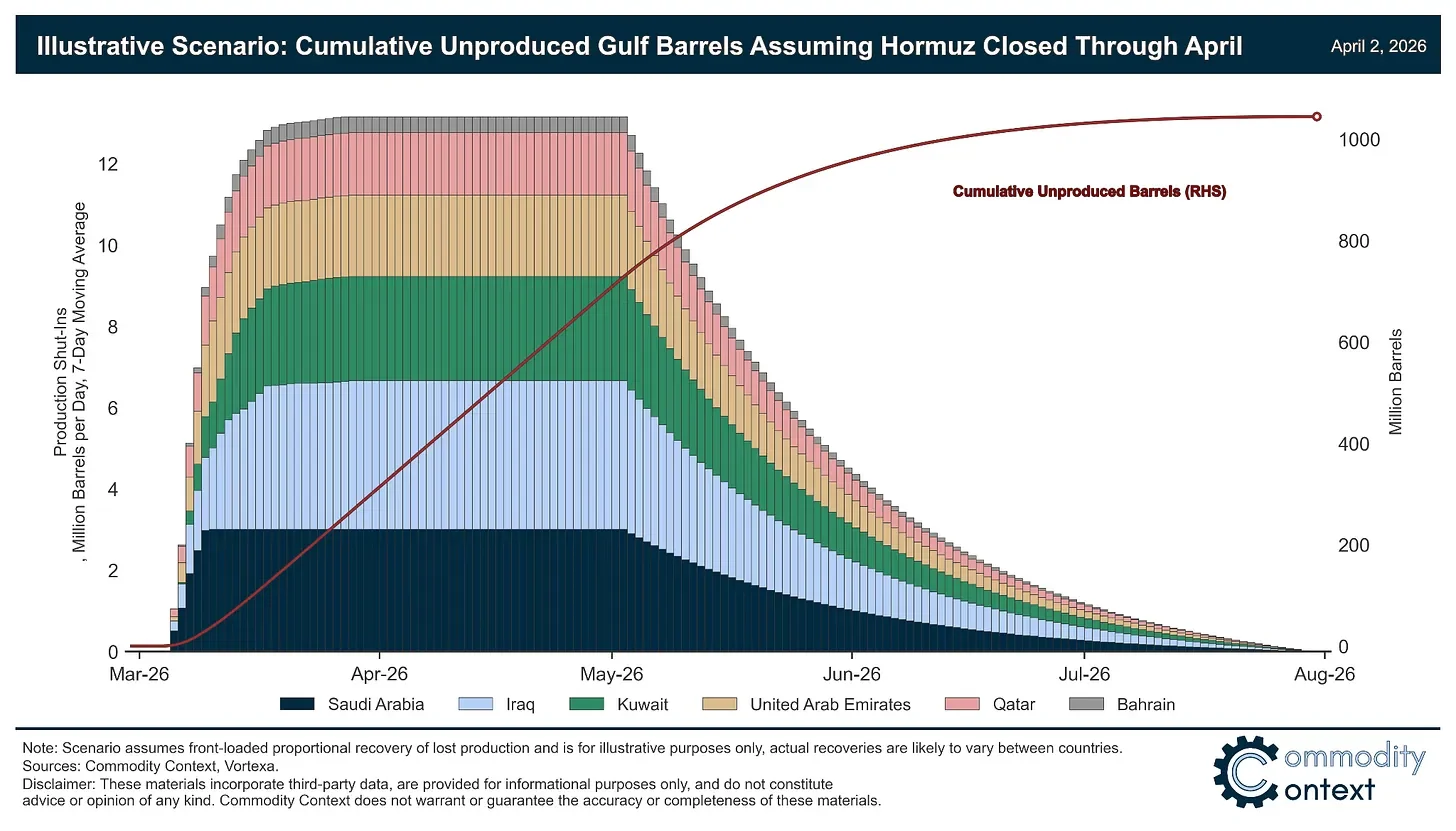
By now, it is not hard to see what’s happening—and what comes next:
This is the largest energy shock in modern history—unprecedented.
Peter Zeihan was right: we are undergoing a global macroeconomic and geopolitical shift. The world will deglobalize and deindustrialize faster than expected.
Markets are built on a house of cards—manipulated by Byzantine actors, sustained by fiction and cooked books.
Interruptions in energy flows will strain SPRs & supply. Rising prices will destroy demand. Poor nations will be outbid in the race for commodities.
Rising fertilizer costs—or outright shortages—will lead to famine.
Fuel shortages (diesel, kerosene) will lead to rationing once stockpiles are depleted.
Energy shortages will bring blackouts, rationing, or outright energy lockdowns.
Inflation will skyrocket.
Air travel will become inaccessible or halt altogether.
Commodity supply chains will fracture.
Sovereign currencies will debase against reserve currencies under import pressure.
Sovereign debt will rise when governments attempt to dig themselves out from a hole.
A global recession will spread—and the numbers made public will be manipulated.
Crime will rise.
Authoritarian responses and censorship will follow.
Systems will break down: water, electricity, utilities, transport, roads, communications.
No one is talking about this polycrisis—just as few saw the lockdowns coming before March 22, 2020. The implications are too vast to unravel or fully grasp. The impacts will be asymmetric across nations and regions, but the response will eventually become global, swift, and unified once again.
I learned self-sufficiency the hard way in 2020 and 2021. This dawning event will be different. No level of preparation will leave things unchanged—during or after. Physical reality (energy, food, water) will always override institutional abstraction faster than institutions can adapt.People will sacrifice much to endure it. The task now is not merely to survive, but to flourish despite it.
To do that, in order of priority, we must secure:
Land — your base and turf to build and defend.
Water — harvest rain, build cisterns (minimum 5 m³), dig wells, and learn filtration.
Food — grow staples, secure local sources, raise chickens.
Shelter — build quickly, build well.
Energy — install solar, store batteries, stockpile fuel where possible.
Barter — hold goods others will need; trade will replace currency in many places. Cuba has survived decades this way.
Community — above all, build a tight-knit group that shares your values and vision. Without it, everything becomes exponentially harder.
Choosing to off grid your life is a hedge against a system that is designed to fail. We do this to protect our lives, family and property. It certainly comes with trade offs, it is a lot of hard work to get there. But these are minor inconveniences in the long run when confronted with global planned demolition for the sake of a globalist take over.
We don’t get to decide when this 2026 energy polycrisis ends—or how governments will respond. But we do decide how prepared we are when it arrives and it is here now.