HOW TO BUILD A COMMUNITY
Growing up around the world throughout the 1990s and early 2000s, I rarely knew my neighbors. I did not know their names, their needs, their dreams or struggles. The anonymity of the big city was a relief then. It offered freedom. A chance to shape your own identity without expectation or judgement. My twenties became a long season of drifting or freefall, of movement without roots, and for a time that allowed experimentation and growth.
Then reality arrives.
Reality arrives the day you have a flat tire and nobody stops to help because nobody knows you. Or when the funds run dry at the end of the month and there is no one to call. Or after a hard week, when there is nobody willing to sit with you for an hour and listen.
The truth is simple: we were not meant to live this way. Ungrounded, unaided, unheard and unknown.
“Globalism destroys community.”
Catherine Austin Fitts.
For many years I tried to live as the globalized modern youth. Endless movement. Endless novelty. Endless possibility. And after enough years passed, I realized I had very little to show for it beyond experiences and distance. The antidote to globalism is localism.
That sounds simple. It is not.
Localism is hard work. It asks you to stay put. To know your neighbors. To spend years building trust instead of chasing novelty. There is no localism without community, and no community without sacrifice. And the reward for sacrifice? Loyalty. Legacy.
Settlements have always formed around resources, climate and geography. But communities themselves have always been built deliberately by people willing to bind themselves together through mutual need, shared values and shared labor.
Today it feels as though every frontier has already been explored. The valleys mapped. The forests cut through with roads. Yet despite all this expansion, people are starving for belonging more than ever before.
We still need community to thrive. This becomes especially true when raising children, building a farm or maintaining a homestead. There is always more work than one household can carry alone. Fences collapse. Roads wash away. Crops fail. Water systems break. Children need watching.
Sooner or later, life itself becomes communal. There is a certain magic in the Monday evening potluck, in the blessing of routine, in losing yourself in the gardening and planting before the rains arrive.
And for that reason, good neighbors are not a luxury. They are a lifeline.
To be trusted by those around you matters deeply. It is part of the Christian understanding of life that we are called to help one another, to carry burdens together rather than alone.
Most people will never have the resources of a king or a corporation to build entire communities from scratch. But we must still strive to start small and start well.
And the first steps are remarkably simple.
Be kind to people.
In Guatemala, old customs still survive. Good manners still matter here. People greet one another and chat about the weather or town gossip. Neighbors remember acts of kindness. There remains an understanding, especially in the villages and mountain roads around Antigua Guatemala, that people belong to one another whether they like it or not.
Kindness does not go unnoticed here.
People remember the man who helped push a truck out of the mud during rainy season. They remember who offered water to farmers passing under the afternoon heat. They remember who lent tools, who showed up, who helped carry heavy loads up the mountain roads.
Trust is built slowly through small acts repeated over years.
No good deed goes unseen by God.
But community also requires usefulness.
To become a good neighbor means offering something back to the people around you. Your skills should complement the needs of the community that takes you in. Rural life still values practical competence in a way modern urban life often does not.
These are communities that understand sweat and toil. Here people still build homes, repair roads, grow food, heal the sick and work the land. Hard-earned skills carry weight because they always have.
Existence may seem simpler in these places, but simplicity should not be mistaken for weakness. This way of life has survived for millennia because it works.
THE PROPOSITION
From our homestead I began dreaming about what good neighbors might look like again. Resilient families. Kind-hearted people. Hard workers. Individuals capable of depending on one another when difficult seasons arrive.
But how do you bring such people together?
The answer, perhaps, begins with a shared vision.
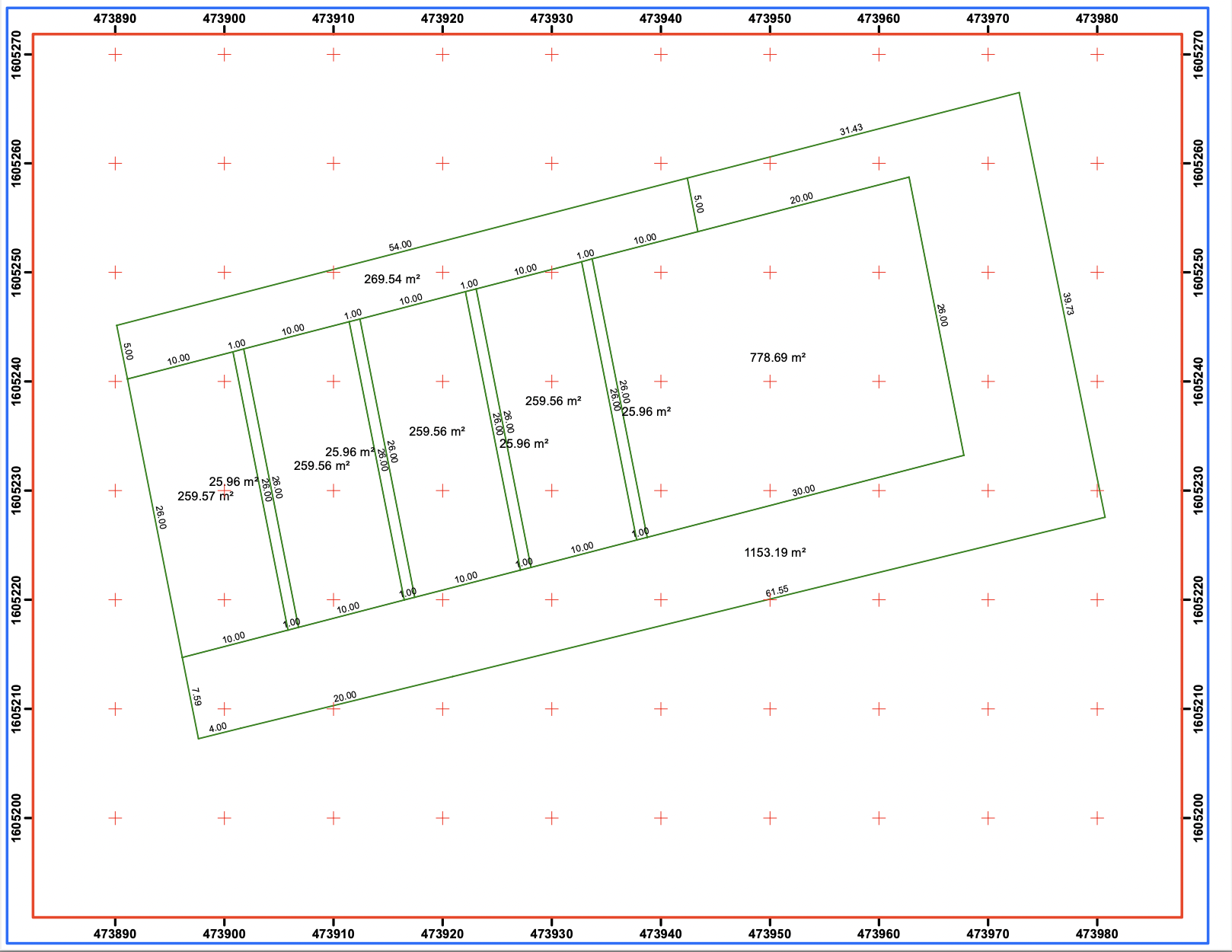
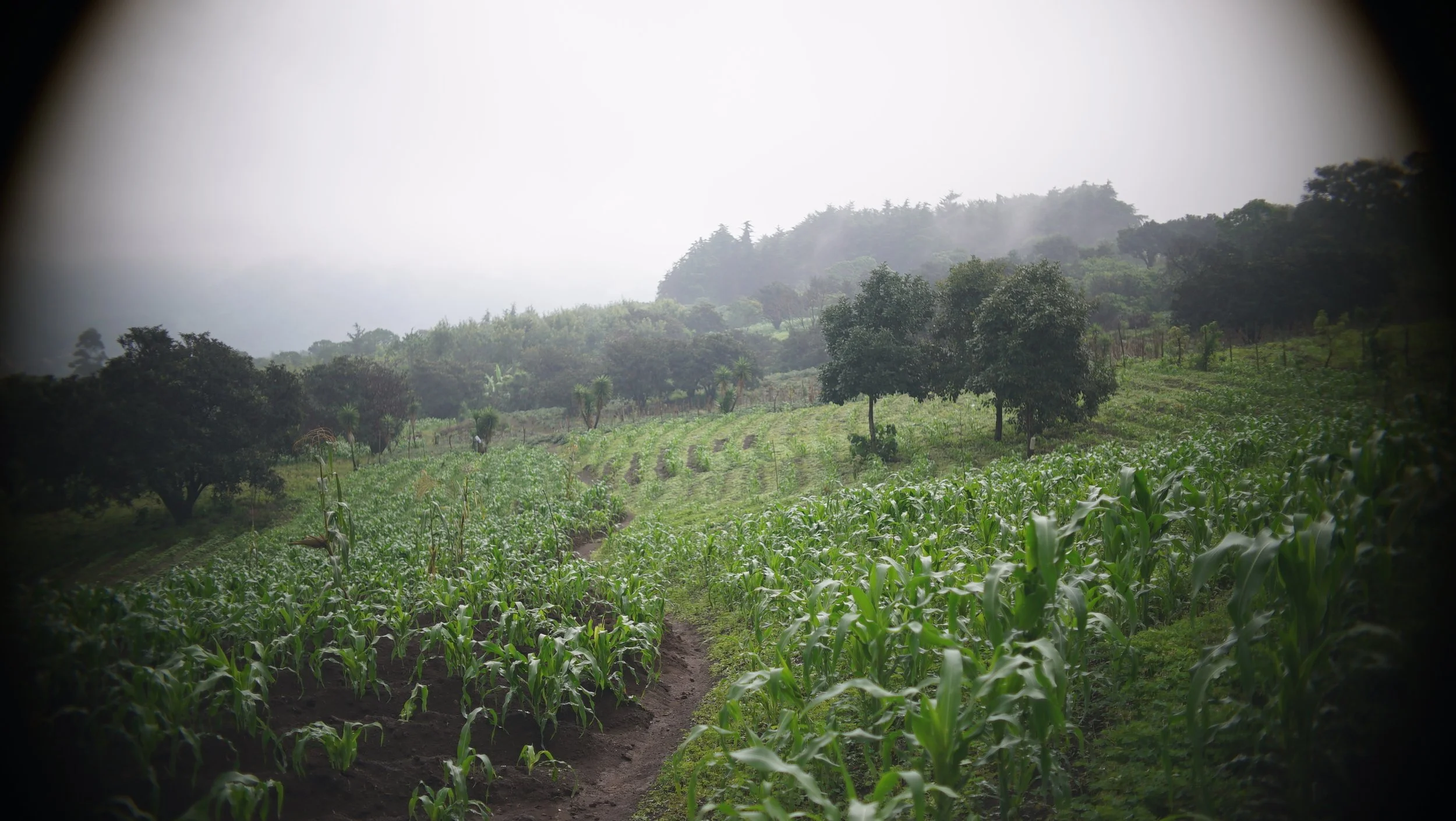
We imagined a small community in San Pedro Las Huertas. Far enough from town to preserve silence and privacy, yet close enough to enjoy the beauty and life of Antigua. Not a development, but a small colony surrounded by farmland and trees. We named it Camino 5 after the date it was conceived.
The idea itself is simple.
Five plots surrounded by orchards and a communal garden. Small enough to manage without becoming overwhelmed, yet large enough to raise a family and grow food.
To the north lie views of Antigua. To the south rises Volcán de Agua. To the west stand Volcán de Fuego and Acatenango.
At the center sits a cultivated communal garden of roughly 1,400 square meters, intended to help sustain the families living there while also creating a natural green barrier around the homes. A place of cultivation rather than ornament.
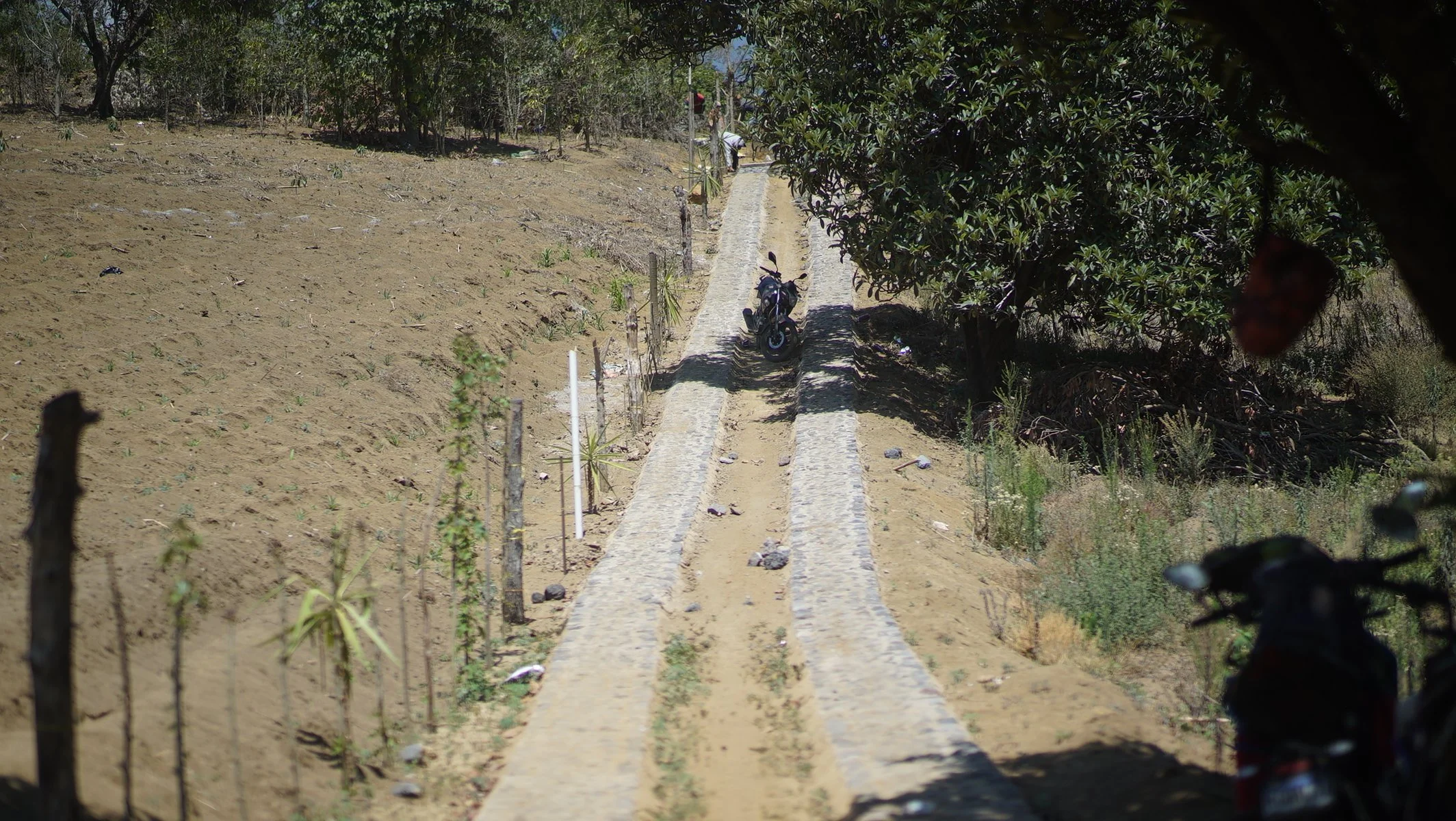
The properties would be connected by a private cobblestone road lined with low solar lights to avoid light pollution. Fenced not with concrete walls, but with fruit trees, bamboo and climbing vines.
Each home would have its own solar infrastructure, biodigester, rainwater catchment system and water cistern to prepare for dry months.
The surrounding land remains farmland on all sides.
There is even a small café a few blocks away that could serve as a shared workspace and meeting place over locally grown coffee. A small stand selling surplus organic produce and seasonal fruit to the valley below.
It is a modest idea. Small in scale. Almost insignificant against the machinery of the modern world. But perhaps the future belongs to smaller things again.
This experiment in self-sufficient living has already attracted people looking to retire, raise children, reconnect with nature and build something lasting alongside others rather than alone.
Strength comes through unity. And the future, if it is to exist at all, will likely be built through cooperation between rooted people who still know their neighbors’ names.
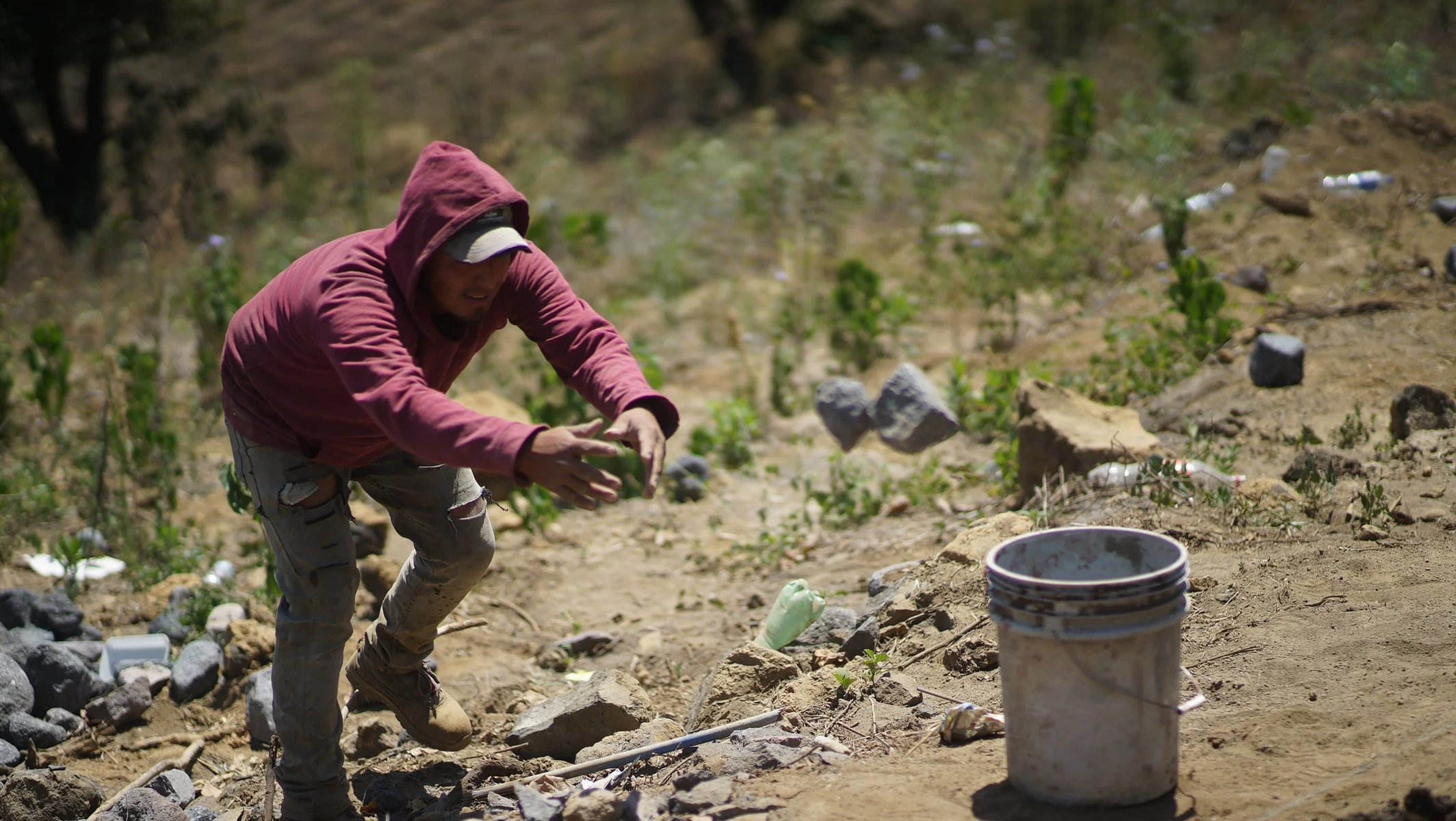
And today, we laid the first stone of Camino 5.