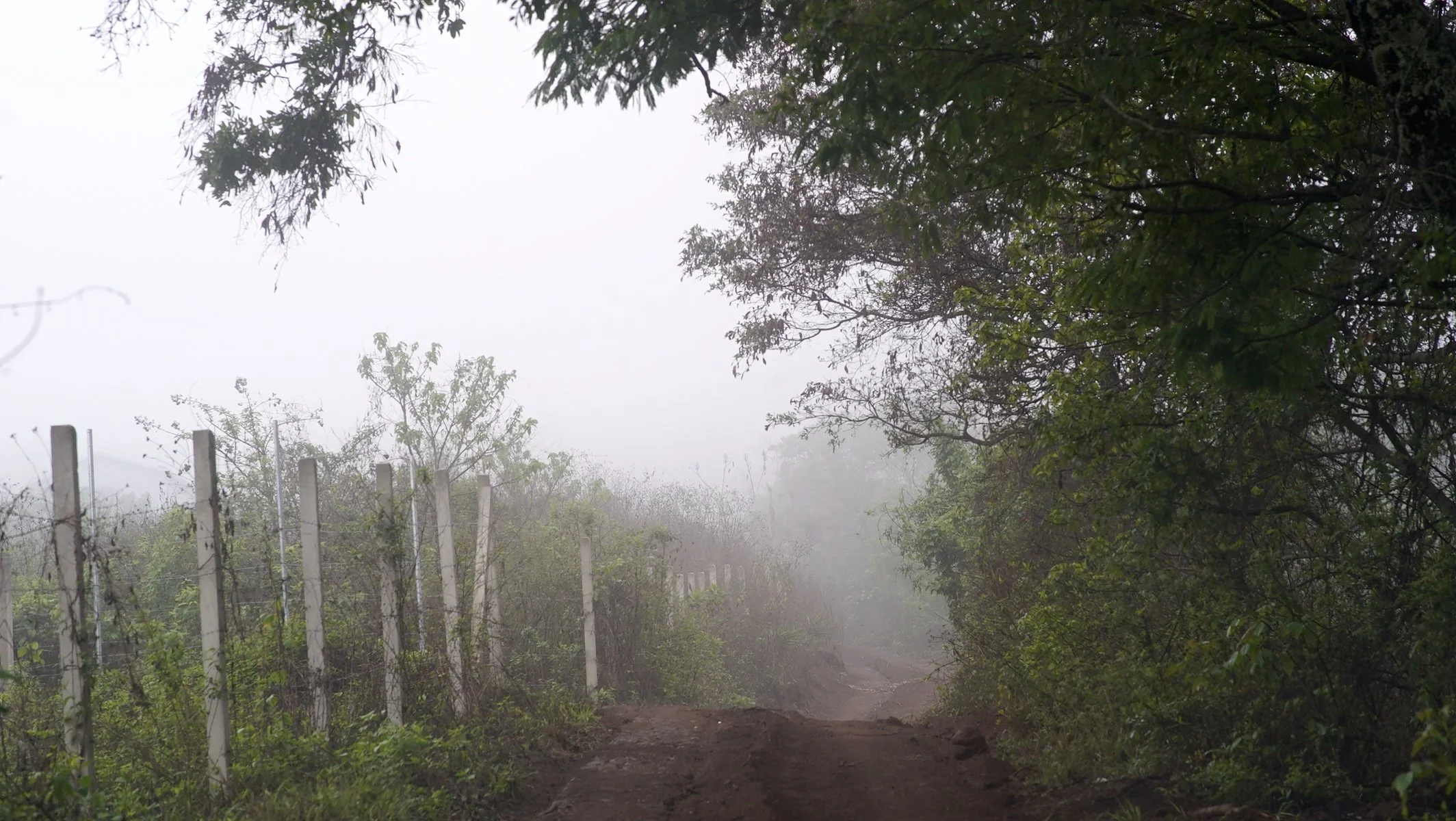
RANTS FROM THE MOUNTAIN: OWN ASSETS OR GET WIPED OUT
Hormuz closed five months ago. Since then, the paralyzed corridor signifies almost two billion barrels of oil that never made it to the market. Qatar declared force majeure on its LNG exports. Oil fields halted. Ships sat stuck for months in warm waters with missiles flying overhead. Ports and loading terminals were destroyed. Insurers backed out indefinitely. Today, the Houthis closed off Bab el-Mandeb, while Ukraine droned Russia's largest refineries. So obviously oil went to at least $200 per barrel, right?
Wrong. It mostly stayed in the antebellum range.
What sort of black magic could possibly result in such a consistent defiance of market laws for so many straight months?
In part, the answer lies in China's dramatic halt in imports, the Trump administration's massive release of the U.S. Strategic Petroleum Reserve, many other countries coordinating the release of their own buffer reserves, demand destruction, the depletion of worldwide commercial inventories, and, most importantly, blatant market and narrative manipulation.
For every physical barrel of oil, there are roughly 60 paper futures contracts.
The oil and energy markets have become overwhelmingly financialized. Traders and algorithms can buy and sell financial instruments that no longer correspond to real-world physical realities for surprisingly long periods of time.
That is, until molecules run out.
Until economies screech to a halt because the queue at the gas station is too long, or fuel triage becomes militarized to protect hospitals and care homes as it would happen in countries like Guatemala after the 2 week period of commercial inventories run out after the last cargo ship arrives to our ports.
Back in 2009, Wall Street shook under the threat of financial doom, threatening to bring down the entire global financial system. At the root of it all were subprime mortgages and a myriad of other grotesquely overleveraged financial instruments—debt on top of debt on top of debt—that no one really understood. To this day, I'm not convinced anyone truly does.
The solution?
Print a couple of trillion dollars. Quantitative easing. Bail out the culprits to avoid systemic failure. Leverage over leverage over leverage.
The recession came the very year I graduated with a degree in economics. I was one of many who found themselves forced to switch careers almost immediately after the graduation ceremony.
And since then, I have seen it all. The meme coins. The ETFs. The Metaverses. The betting apps. The explosion in sovereign debt. The rolling interest on IMF loans. The slow-burning collapse of Europe. The unsustainable Japanese yen. The AI bubble. The dot-com bubble. The "buy your coffee on a six-month payment plan" insanity. Student loans for redundant degrees for non-existent careers. Fifty-year mortgages. The reversification of carry trades. Hedge funds hedging against the obsolescence of an entire generation. Credit swaps. Zombie corporations being short-squeezed. The shorting of the American, Guatemalan and even Swedish dream. Small family honest companies swallowed whole, only to be ripped apart for nickels.
"I've seen things you people wouldn't believe.” To quote Blade Runner—the original, and still the best.
And I suspect the best is yet to come.
Markets are rigged, and the method is over-financialization.
Stack levels of ungodly and byzantine abstraction on top of energy, food, seeds, fertilizer, rare earth minerals, commodities, medicine, factories, offices, retirement funds, savings accounts, and credit card scores.
Then add another thirty-three layers of abstraction on top for good measure, until no one really knows what's going on anymore—except that the Fed will probably raise two basis points next spring.
Then we're all really screwed.
Or not.
Who knows.
I can't tell anymore.
Call me primitive or old-fashioned. Perhaps even dumb. But I don't trust it. Just another house of cards. A Tower of Babel swaying in the wind, still climbing upward. The only solace for wealth preservation I have found so far is land.
Specifically, for my family and me, land in Antigua Guatemala.
The banks haven't yet cracked the formula for turning it into some cryptic acronym buried in the back office of an investment fund. Quite the contrary—it shows signs of being immune.
There appears to be a bubble in prices, yes, but I would argue that it is largely the result of central banks' exploding balance sheets. Pump trillions of dollars into fraud and fake economies, and don't be surprised when prices rise everywhere.
In our case, however, the increase is fundamentally different.
The Antigua Valley is small. It is confined by mountains that do not allow new construction to grow unscrupulously. Large coffee fincas still make up most of the land in the valley, and the historic downtown is only an area of roughly ten blocks by ten blocks.
Antigua's relatively small population has seen a significant inflow of new expats from North America and Europe every year since COVID. Even if only fifty arrive annually, that steady inflow represents fresh demand for housing and land that doesn't seem to slow down, even under global financial stress. On the contrary, the worse things become out there, the more they seem to come.
As a UNESCO city, the CNPAG maintains tight control over new construction downtown, limiting supply.
The local Guatemalan market has also exploded in recent years, competing with foreigners for the few available properties.
Tourism has grown exponentially over the last few years, turning countless properties into hostels, inns, hotels, and Airbnbs.
Finally, Guatemalans don't trust banks, and banks don't trust us.
Getting a mortgage in the local banking sector isn't easy, and most Guatemalans aren't particularly interested in one anyway. Ours remains a predominantly cash-based society. We pay for almost everything upfront. In cash.
That limits debt. It limits leverage. And it limits many of the ills that inevitably come with both.
So that land in Antigua is not over-financialized. It is real. And it provides a hedge against the polycrisis.
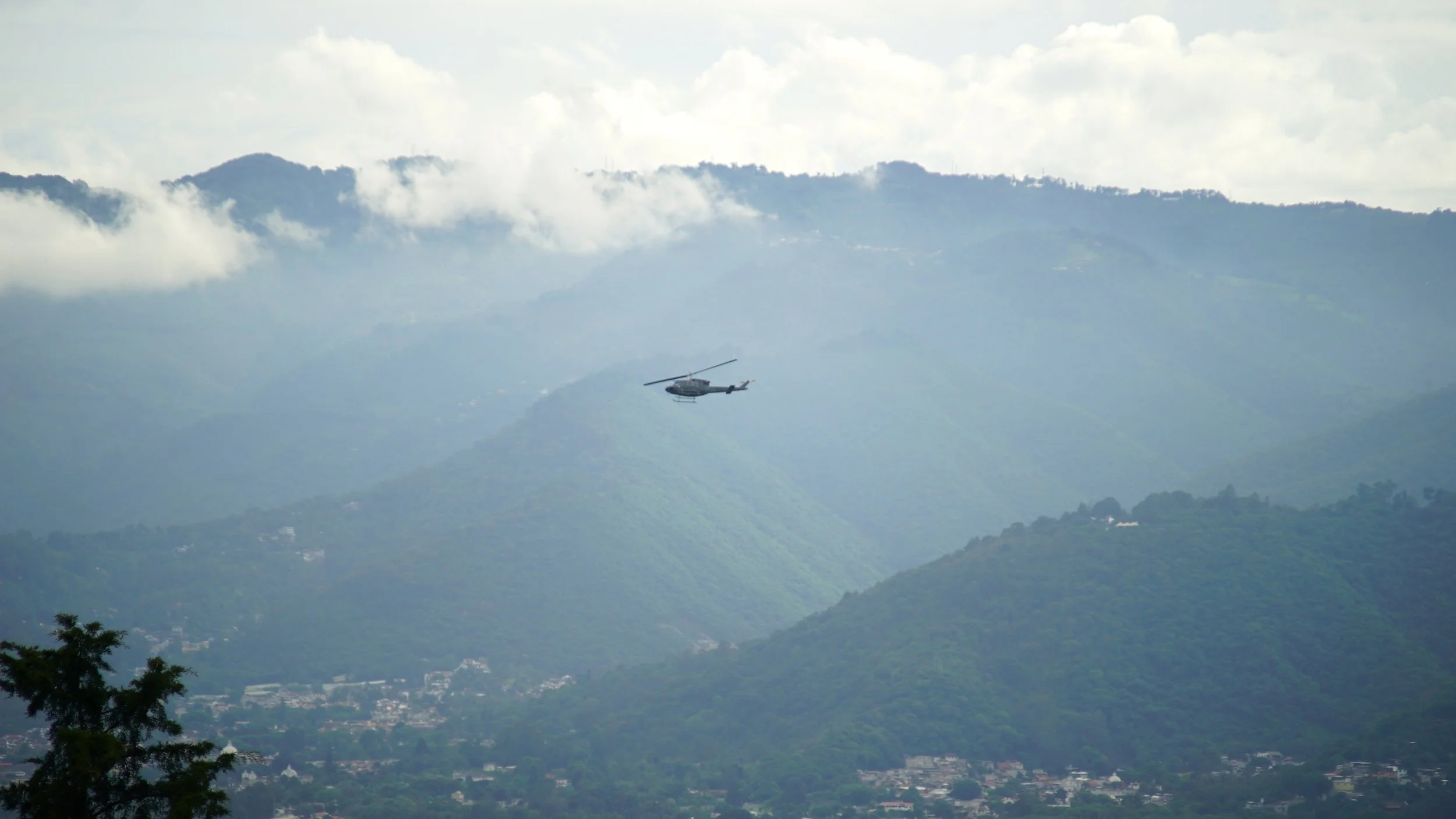
In our case, off-grid land has provided protection against the threat of debasement and, more importantly, reopened a promise I wish I had discovered many years ago:
The promise of being able to dream again.
We are currently planning and, little by little, developing concepts for the future use of our land.
A small organic Nordic bakery and bistro café just below the farm. A twenty-foot shipping container and a few shaded tables where people can enjoy kanelbullar, our very own local coffee blend, Easter and Christmas semlor, and fika. Who knows—maybe one day even our own recipe for Skagenröra.
A small produce shop selling organic products from the farm: seasonal fruits, vegetables, free-range chicken, organic eggs, and raw dairy products.
A playground for children—branches to hang from, tree stumps to jump across, farm animals, flower trails, and countless avocados to pick every September.
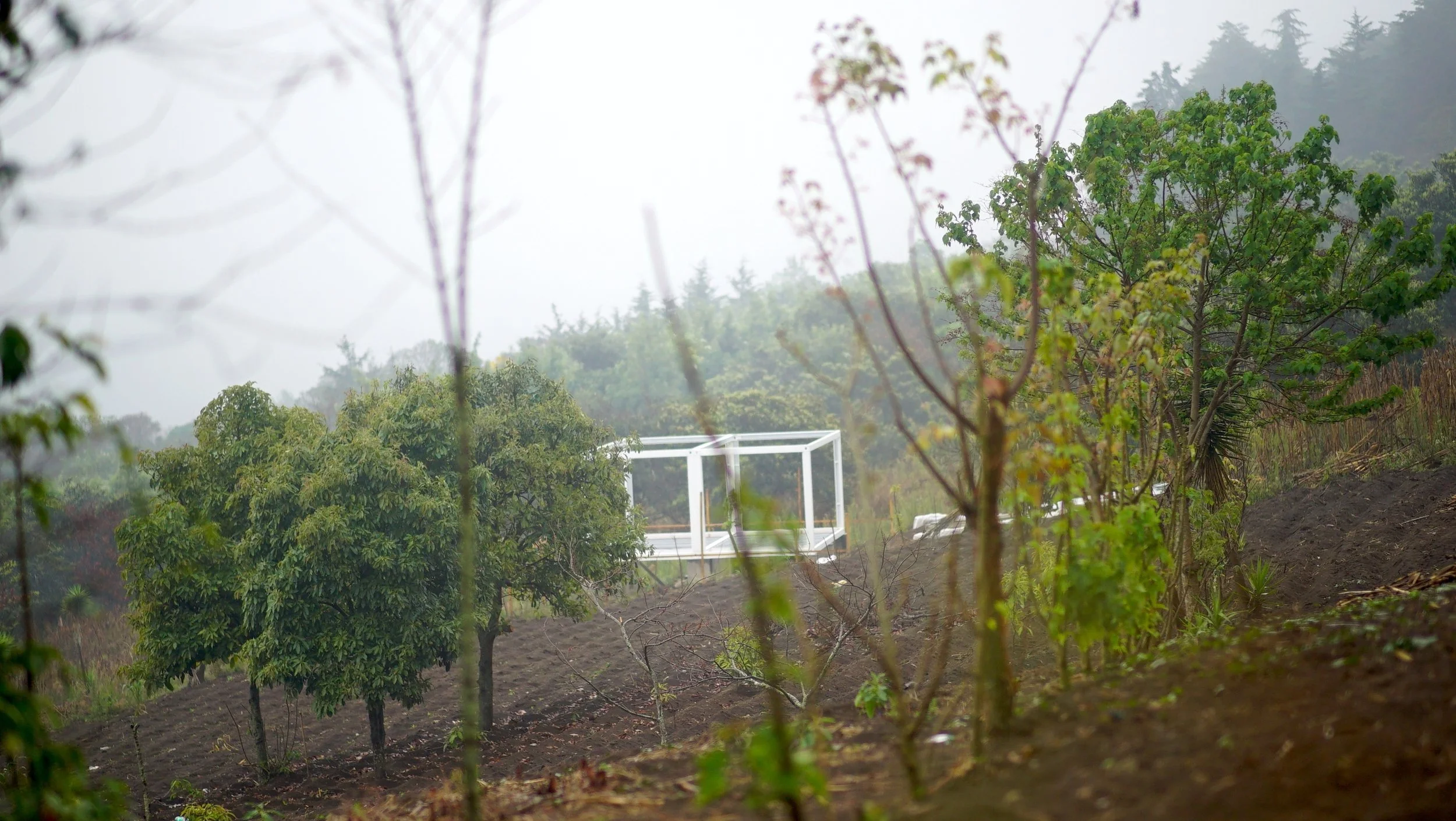
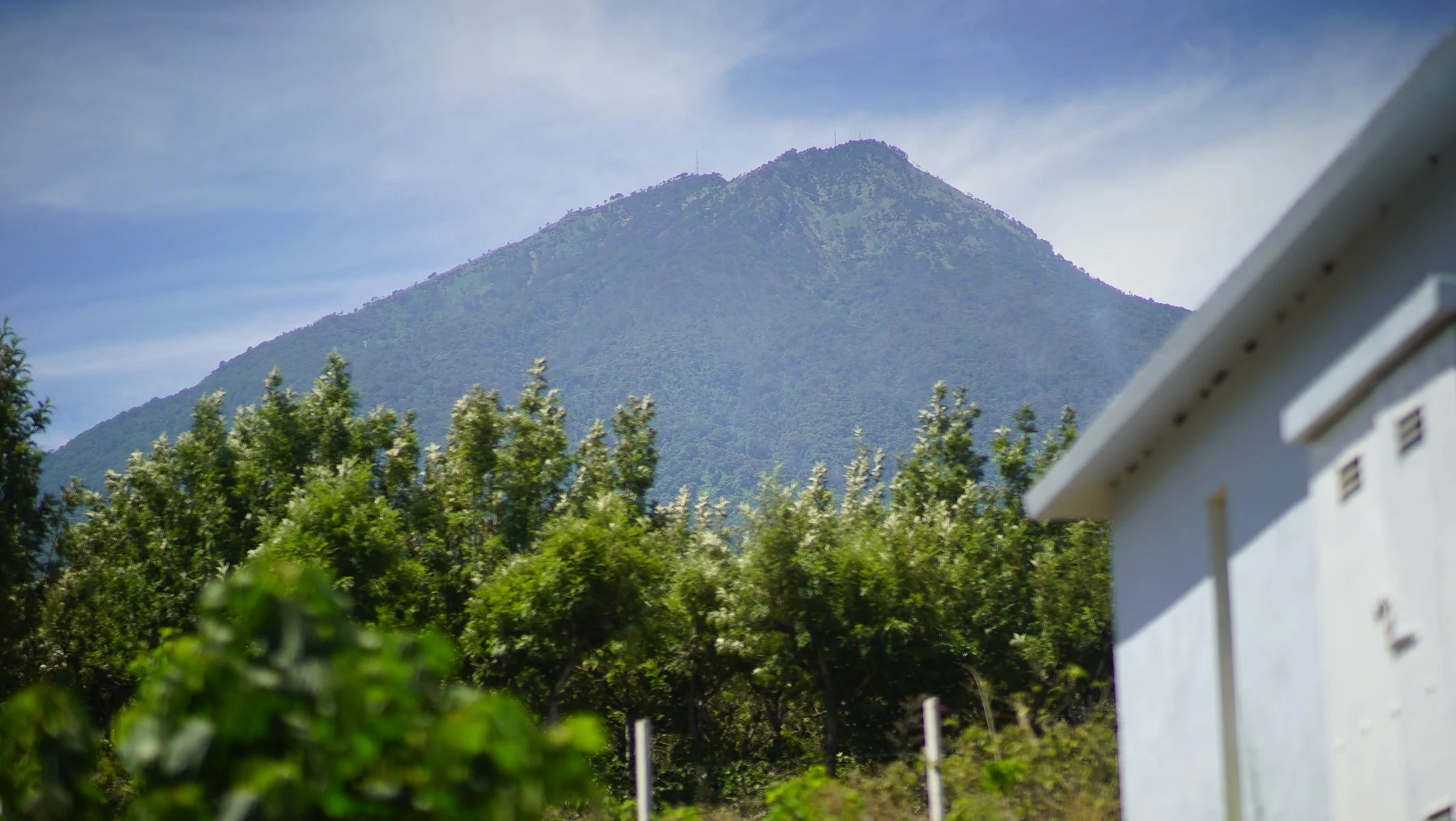
A handful of off-grid A-frame cabins for couples, high up on the volcano, far away from traffic. Ice-cold showers. Warm bonfires.
These are only concepts for now, but they represent something much greater:
The capacity to reinvent yourself. To try something new. To build a legacy for my loved ones. To not care what happens halfway across the world or in some dark room in the great halls of power.
I don't know whether any of them will work. But I do know this land is ours. And it can be yours as well.
What we make of it depends on us, and no one else. This land will not let us starve. It does not exist in the great markets of numbers and symbols. It is too real. Too immediate.
But wouldn't scaling back into your small homestead mean giving in to poverty?
Well, no.
Bubble bursts and market crashes are not engineered to correct prices or improve resource allocation. They are designed to impoverish the people and wipe out the middle class. The engines of ‘progress’ suppress wealth creation through endless cycles of boom and bust. We are not meant to survive them, ceteris paribus. And they will stop at nothing.
That is why we hold on to real assets—not to make a 15x return, but to hold on for dear life to the only things they cannot take away. We pull back. We endure. We fight to see another day.
And if they try to print themselves out of the next crisis again, then the value of paper money may go up in nominal terms but not in purchasing power. If they don't, we'll still have a nice crop next spring.
The avocado trees are looking healthy this year.
Yes, I am being romantic, in a way, but it is far easier and healthier to be a romantic in the countryside than in a 45 level tower with infinite cardboard wall cubes. I like the struggle of it all, it keeps things real. Very real. Real to a degree that few understand and many more should. Not until then do you see the farce that plays before us all in the abstract world of the banker’s wars.
Owning assets opens up the possibility of reinventing yourself when you need it most. Not necessarily to grow. But to sustain. To hedge against the risks imposed upon us through endless inflation. Under current conditions, your salary, savings, and investments must grow between 5% and 15% just to keep pace with inflation—just to end the fiscal year with the same purchasing power before tax season comes around again. That, my friends, is wholly unsustainable. It is also inhuman and criminal.
Instead scale back just enough to keep your head above water until the largest waves have passed. Gold can also do that. But its price has been greatly suppressed since the 1970s. And my children cannot build their home when they turn eighteen on a bar of gold. It is certainly more fungible than two cuerdas of Geisha coffee near San Pedro Las Huertas. But gold does not grow sweet potatoes. And it does not catch and store rainwater particularly well.
Whatever happens in New York, London, or Shanghai next week—or next month—will no doubt reach us eventually. Yes, even up there, at 1,790 meters above sea level. But it will not arrive with dread. Nor with the fear that accompanies the uncertainty that the big cities see everyday, every TV blaring news cycle. Regardless of what happens, we will still be waiting for the next rain to fill up the cistern, fixing the broken fence, tending to the animals, and caring for the trees. One day, without warning, somewhere some numbers will turn red on computer screens. Their order will crumble. But in this world, and in these hills, we are safe from that.
Worst-case scenario?
We might have to scratch the Skagenröra from the menu for the time being.